
Rope Access vs Scaffolding - which one is better?
It’s a common questions in this industry - is Rope Access a better choice compared to scaffolding?
Honestly - no, but also yes. For the vast majority of clients, this is about picking the right solution for your specific job.
What is Rope Access?
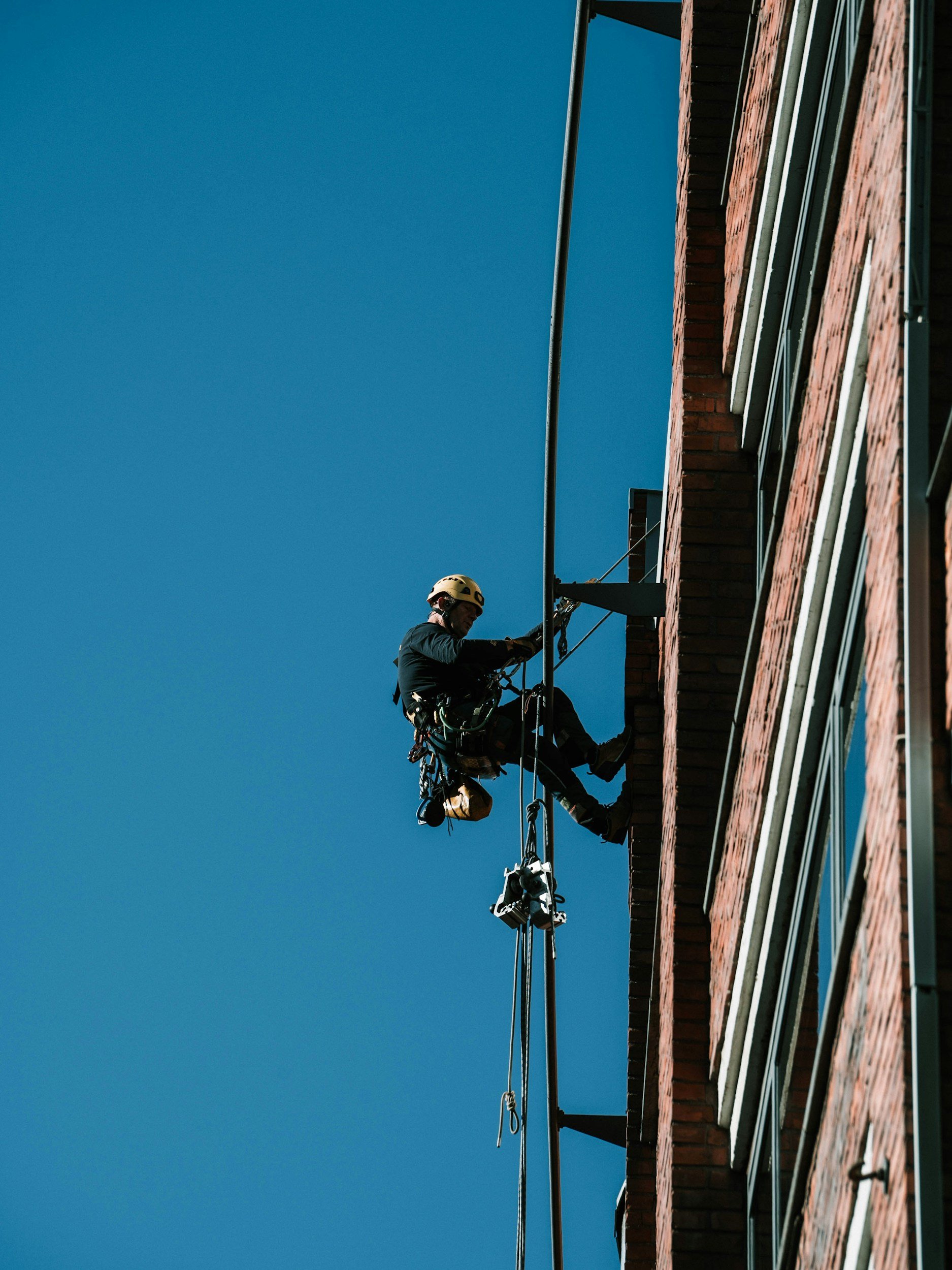
Rope Access technicians use ropes, harnesses, and rigging to access awkward areas at height. They are usually IRATA-certified (like SRA director Tom). Frequently they work on things like building inspection, facade cleaning, installation work… the list goes on! If you’re curious about what we can cover, have a lookout our services page).
What is Scaffolding?
In contrast, scaffolding provides a temporary structure, which acts as a stable working platform. It’s very widely-used - walk through your nearest town centre and you’ll almost definitely see it on at least one building! Scaffolding is often used for larger-scale construction, jobs that are going to take an extended amount of time.
Rope Access vs Scaffolding - who wins?
That massively depends on what you’re comparing, so let’s have a look at common factors!
Cost: Rope access almost always wins, as it’s cheaper and faster to move. Scaffolding may be slightly better for very long projects or where a really large working platform is needed
Speed: Rope access wins hands down - it’s usually ready to operate within a couple of hours
Access: again, rope access is the winner here. It’s super flexible, meaning it’s the natural choice in awkward, confined, or high-rise situations.
Durations: if longer-term access is required, scaffolding is probably your better choice. Rope access is excellent for shorter or one-off jobs.
Disruption: Rope access has a much smaller footprint and doesn’t obstruct pavements or access points (usually). This can make it a really good option if community access needs to be maintained.
Weather: both options are sensitive to weather. Generally, strong winds or storms aren’t conducive to working at height and bad weather may mean your project has to be postponed, regardless of the option you choose.
Type of work: Some tasks, like prologued or wider scale brick work, suit scaffolding as it provides a larger stable platform with less requirement to be moved around. Others, like inspection, spot repairs, or leak investigations suit the flexibility and fast deployment of rope access.
Overall, Rope Access wins in high-rise or oddly-shaped building situations, shorter-duration projects, city locations where access needs to be preserved and space is limited, sensitive spaces where impact on the site and building are really important (think - listed buildings), and where speed is necessary.
Scaffolding on the other hand is your best option where an ongoing stable platform is required, you have large(r) crews working together, where access is straightforward and where heavy materials need to be transported upwards.
Can Rope Access and Scaffolding Be Used Together?
Absolutely - if your project requires it, a hybrid approach can be implemented! Usually, though, one or the other will do just fine. It’s also worth noting that there are a range of other height-access solutions, like cherry pickers, hanging platforms, etc - this may also have a place in your project and are worth investigating.
How do I know which one is right for me?
Make sure you’re asking the right questions and are clued up about your project. Understand duration and location, have your budget set, and know what type of work you’re actually asking for. Remember - Rope Access and scaffolding provide the height access - but then the work up there has to be done!
If you’re not sure which method suits your project, just get in touch. We’ll always advise honestly, and can assess and provide a free quote if rope access is the right method for you.